Accounting tech trends in the UAE are reshaping how SMEs manage finance, compliance, and decision-making in 2026. The focus is no longer on complex transformations or expensive systems. Instead, UAE businesses are adopting practical, targeted technology upgrades that reduce manual work, improve VAT accuracy, and create clean audit trails.
For SMEs, the real challenge is not knowing what tools exist, but understanding which upgrades actually matter, how to implement them without overwhelming teams, and how to stay compliant as regulatory expectations rise.
This guide from Opulence Accounting and Bookkeeping LLC breaks down the most important accounting technology trends in the UAE for 2026 and explains how SMEs can apply them step by step.
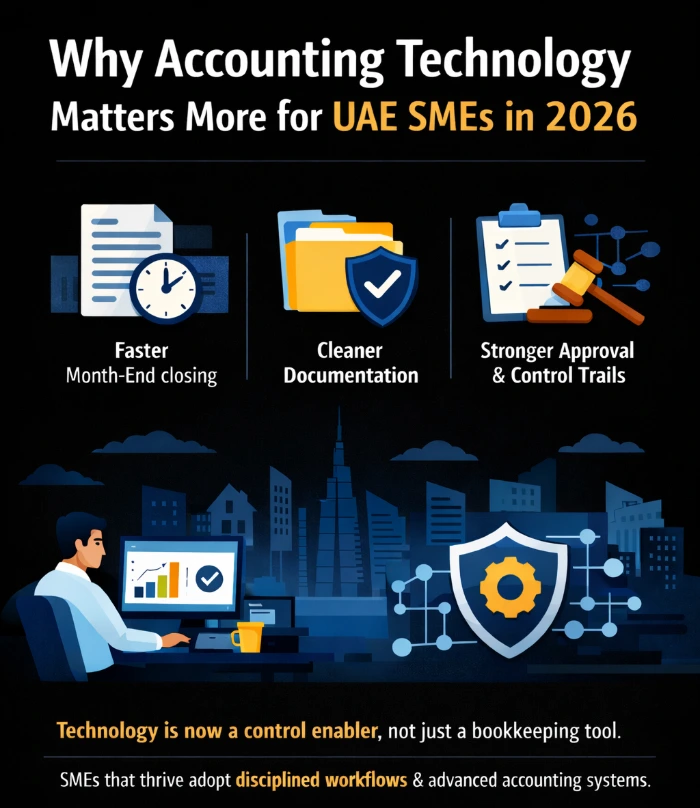
Why Accounting Technology Matters More for UAE SMEs in 2026
With VAT enforcement, corporate tax compliance, and increased audit scrutiny, finance teams are under pressure to deliver:
- Faster month-end closing
- Cleaner documentation
- Stronger approval and control trails
Technology is now a control enabler, not just a bookkeeping tool. The SMEs that benefit most are those that adopt disciplined workflows supported by the right accounting systems.
Accounting Transformation Trends for SMEs in 2026
SME accounting in 2026 is shifting from reactive bookkeeping to structured, real-time financial control. These trends reflect a move toward stronger compliance, better data discipline, continuous financial management, and smarter use of technology—helping businesses improve accuracy, reduce risk, strengthen cash flow visibility, and build audit-ready financial systems.
Trend 1: Bank Feeds Become the Starting Point for Accounting
Why This Trend Matters
In 2026, bank feeds are no longer optional. Daily bank data reduces month-end pressure and helps detect errors while transaction context is still fresh.
How SMEs Can Implement This
- Connect live bank feeds within your accounting software
- Set up basic mapping rules for recurring transactions
- Review unmatched transactions twice weekly
- Restrict manual backdating without finance lead approval
- Store bank reconciliation reports as part of your monthly close pack
Practical benefit: When bank and ledger balances match consistently, VAT reviews and audits become significantly easier.
Trend 2: E-Invoicing Discipline Extends Beyond Large Enterprises
Why Invoice Quality Is Now a Differentiator
Even when businesses are not yet legally mandated to issue structured e-invoices, customers, auditors, and tax consultants expect consistency. Poor invoice discipline leads to VAT mismatches, delayed payments, and disputes.
Practical Actions for SMEs
- Lock a single invoice template across the organization
- Standardize customer master data (TRN, legal name, address)
- Prevent invoice issuance without a linked contract or PO where applicable
This is one of the most cost-effective accounting tech trends in the UAE because it relies more on internal discipline than on new software.
Trend 3: VAT Controls Shift to the Transaction Level
The Problem SMEs Face
VAT errors usually occur when transactions are reviewed too late, often under filing pressure.
The 2026 Approach
Modern accounting systems now embed VAT logic at the posting stage.
How to Apply This Trend
- Create VAT tax codes aligned with common transaction types
- Introduce “hard stops” for missing TRNs on B2B invoices
- Run weekly VAT exception reports and clear issues early
Result: Fewer last-minute corrections and a defensible VAT decision trail.
Trend 4: Receipt Capture Evolves into Evidence Management
What Has Changed
Scanning receipts is no longer enough. In 2026, evidence must be traceable and review-ready.
Best Practices for SMEs
- Enforce attachment of invoices for all high-value expenses
- Apply consistent file naming (supplier name + date)
- Review missing proofs weekly instead of quarterly
This
significantly improves audit readiness and internal clarity.
Trend 5: Approval Trails Tighten Across SME Finance Teams
Why Controls Matter More Now
With corporate tax and enhanced compliance expectations, informal approvals are no longer acceptable.
Simple Workflow Improvements
- Separate “approve” and “pay” roles, even in small teams
- Store approvals alongside source documents
- Use structured requests instead of chat messages
Key Control Rules to Implement
- Payment requests raised via forms or tickets
- Approval recorded with name and date
- Vendor master edits restricted to one owner
- Credit notes require documented reasons and approval
Trend 6: Continuous Close Replaces Month-End Firefighting
The Old Model
SMEs often postpone postings until month-end, creating stress and errors.
The 2026 Model
Continuous close spreads the workload across the month.
A Realistic Weekly Routine
- Weekly bank reconciliation
- Weekly receivables review
- Weekly expense proof clean-up
Month-end then becomes a confirmation step, not a rescue operation.
Trend 7: Dashboards Focus on Cash Flow and Compliance
What Actually Helps SME Owners
Many dashboards look impressive but do not support decisions.
The Two Views That Matter
- A rolling 4–8 week cash flow forecast
- A compliance dashboard showing VAT exceptions, overdue invoices, and unreconciled bank items
These dashboards directly support collections, filings, and risk management.
Trend 8: Accounting Outsourcing Becomes Hybrid
The Shift in UAE Outsourcing Models
SMEs are moving away from full outsourcing or full in-house setups.
A Practical Hybrid Structure
- In-house team handles daily invoicing and posting
- External experts manage VAT reviews, corporate tax adjustments, and month-end review packs
- Both teams use the same systems and documentation standards
This reduces delays and improves accountability.
Trend 9: Data Hygiene Becomes a Competitive Advantage
Why Clean Data Matters
Clean accounting data supports:
- Faster audits
- Easier financing
- Smoother due diligence
What Data Hygiene Looks Like
- Standardized customer and supplier naming
- A consistent chart of accounts
- Clear posting rules that teams follow without guesswork
A Practical Implementation Plan for SMEs
Wave 1: Bank and Proof Discipline
- Activate bank feeds
- Weekly reconciliation
- Attach proofs to key expenses
- Record basic approvals
Wave 2: VAT and Invoicing Discipline
- Weekly VAT exception checks
- Standardized invoice templates
Wave 3: Continuous Close and Expert Review
- Weekly close routines
- External review support for filings
Implementing in waves prevents burnout and ensures habits stick.
How Opulence Accounting and Bookkeeping LLC Supports SMEs
Opulence Accounting and Bookkeeping LLC helps UAE SMEs apply accounting tech trends through practical controls and disciplined workflows, not unnecessary complexity.
Explore our related services:
Technology Works Best with Discipline
The most successful SMEs in 2026 will not be those with the most tools, but those with the cleanest accounting routines. Accounting tech trends in the UAE reward businesses that post closer to real time, attach evidence early, and keep approvals visible.
If you want these systems set up correctly—without trial, error, or compliance risk—Opulence Accounting and Bookkeeping LLC can structure your accounting workflows and keep your books review-ready all year round.
Contact
Opulence Accounting and Bookkeeping LLC today to modernize your accounting processes for 2026
with confidence.